

Sending a daughter to a boarding school is a major decision for any parent. It is not only about choosing a school with good academics. Parents also need to know where their daughter will live and whether she will have someone to approach when she feels uncomfortable or needs help. A good boarding school should create an environment where girls can study, sleep, participate in activities, communicate freely, and grow independently while still having access to responsible adults whenever required.
In this blog, we discuss whether boarding schools are safe for girls, the benefits of boarding education, the key safety factors parents should check before admission, and the best boarding school for girls.
Is Boarding School Safe for Girls?
A boarding school is an institution where students study and live on the school campus. A boarding school can offer a safe and structured environment for girls because students live within a supervised campus instead of travelling between home and school every day. However, safety should never be assumed simply because a school calls itself a residential school.
The real question is: What systems does the school have to keep students safe?
CBSE’s guidelines for residential schools highlight areas such as visitor management, CCTV surveillance, secure entry and exit points, medical facilities, fire safety, trained staff, student supervision, anti-bullying procedures, counselling and child-protection systems. The guidelines also specifically state that girls’ residential areas should have appropriate arrangements regarding outsourced staff and access. Therefore, parents should evaluate the actual safety arrangements instead of judging a hostel only by its appearance.
Benefits of Boarding School for Girls
When the right environment is provided, boarding education can offer several advantages for girl students:
- 24/7 supervised environment: Students have responsible adults around them beyond regular school hours.
- Better daily routine: Fixed timings for classes, meals, study, activities, and sleep can help children develop discipline.
- Quick access to support: Medical, academic, and residential support can be available on the same campus.
- Greater independence: Girls learn to manage their belongings, schedules, responsibilities, and daily routines.
- Peer learning: Living with students from different backgrounds can help develop communication and social skills.
- More opportunities beyond academics: Sports, cultural activities, clubs, and other activities can become part of everyday life.
- Reduced daily travel: Students do not have to commute to and from school every day, reducing one part of the daily travel routine.
Note: All these benefits depend heavily on the quality of the school’s residential management.
What Parents Should Check in a Boarding School for Girls?
Before choosing a boarding school for girls, parents should visit the campus and ask detailed questions to the school authorities. Parents should judge a school based on its overall system, people, and regular practices, not only on photos or advertisements.
1. Separate Residential Arrangement for Girls:
The first thing parents should consider in a boarding school is whether girls and boys have separate residential areas. For this, parents can ask the below-mentioned questions to the school authority:
- Are girls’ and boys’ residences separate?
- Are the residential areas physically separated?
- Who is allowed to enter the girls’ hostel?
- Is access restricted to authorised personnel?
- Are there clear rules for visitors and staff?
CBSE’s residential-school guidelines clearly state that student living areas should be separate from staff accommodation. They also require special safety measures to control access to girls’ residential areas.
2. CCTV and Controlled Entry:
CCTV is useful only when it is part of a larger security system for girls’ safety. Parents should check whether cameras cover important common areas, entrances, exits, and corridors, and whether the school has controlled visitor entry.
The school should also maintain records of visitors because CBSE specifically recommends strong security at entry and exit points, visitor monitoring, and CCTV surveillance on campus premises.
3. Female Wardens and Responsible Residential Staff:
The role of wardens is very important, as they look after students after school hours. Before admissions, every parent should ask the following questions to the school authority-
- House parents or wardens.
- Female staff in girls’ residential areas.
- Staff availability during nights.
- Student-to-supervisor arrangements.
- How complaints are handled.
- What happens when a student wants to speak privately with an adult.
CBSE’s guidelines state that only female outsourced staff should be deployed in girls’ residential areas, with specific conditions for emergency access by male staff (Source: CBSE Official Notification on Guidelines for Residential Schools).
4. Medical Support and Emergency Response:
Children can fall sick or get injured at any time at school. Parents should not only ask whether a school has a medical room but also understand how emergencies are managed. For this, parents can consider the following-
- Qualified nursing support
- First-aid facilities
- Medical rooms or infirmary
- Doctor availability
- Ambulance arrangements
- Emergency communication with parents
CBSE recommends medical facilities, trained personnel, ambulance arrangements, and hospital tie-ups for residential schools.
5. Fire and Disaster Safety:
Parents should also ask about fire safety and emergency evacuation. The campus should have appropriate fire extinguishers, alarms, clearly understood evacuation procedures, and regular safety drills. Students should know what to do during emergencies rather than simply depending on adults. CBSE’s residential-school guidelines include fire-safety equipment and safety drills as important parts of residential-school preparedness.
6. Anti-Bullying and Child Protection System:
Safety is not only about outsiders entering the campus. Bullying, harassment, inappropriate behaviour, and emotional distress can also affect students. Parents should ask:
- Is there an anti-bullying policy?
- Is there a child-protection committee?
- Can students report concerns privately?
- Who investigates complaints?
- Is counselling available?
- Are students educated about inappropriate behaviour and personal safety?
CBSE recommends clearly defined anti-ragging and anti-bullying procedures, accessible counselling and child-protection mechanisms.
7. Counselling and Emotional Support:
A girl living away from home may sometimes feel homesick, stressed, or uncomfortable while adjusting to a new environment. A good boarding school should therefore provide someone students can approach without hesitation.
Parents should ask whether the school has a counsellor, how students can contact the counsellor, and whether students can discuss personal concerns confidentially. CBSE’s guidelines also recommend accessible counselling and emotional support for boarders.
8. Food, Water and Hygiene:
Safety also includes everyday health. For this, every parent should check the following:
- Quality of drinking water
- Cleanliness of washrooms
- Hostel housekeeping
- Laundry arrangements
- Food preparation
- Meal variety
- Availability of healthy meals
- Hot and cold water facilities
- Power backup
A boarding student spends most of the day on campus, so these basic facilities directly affect her comfort and well-being.
9. Room Sharing and Personal Space:
Parents should look at the actual room conditions instead of relying only on brochures. For this, it is important to consider the following aspects-
- Number of students per room
- Bed and storage arrangements
- Study space
- Attached or common washrooms
- Ventilation and cooling
- Room supervision
- Cleanliness
- Privacy arrangements
Also ask whether girls can choose or are assigned different room types according to age and availability.
10. Academics and Study Support:
Parents should understand what happens after regular classes because safety should not come at the cost of education. Is there supervised study time? Can students attend doubt classes? Is the library accessible after school hours? What support is available if a girl falls behind academically?
A residential school should ideally combine academic support with residential care so students do not have to manage these separately.
11. Sports and Free-Time Activities:
Students need healthy activities outside academics. Parents should check whether girls receive equal access to sports, recreational areas, trips, and extracurricular activities. A balanced routine can help students use their free time constructively and develop confidence, teamwork, and physical fitness.
12. Parent Communication and Emergency Contact:
Finally, parents should know how communication works in case of any emergency.
- Can students call their parents regularly?
- How are emergencies handled?
- Can parents contact hostel staff?
- Are there defined contact persons?
- What is the process for taking a student home during an emergency?
Why Matrix High School, Sikar Can Be a Strong Choice for Girls?
Matrix High School, Sikar is a top residential school for girls. Matrix High School (MHS) brings academics, hostel facilities, medical support, sports, and student welfare together on one residential campus.
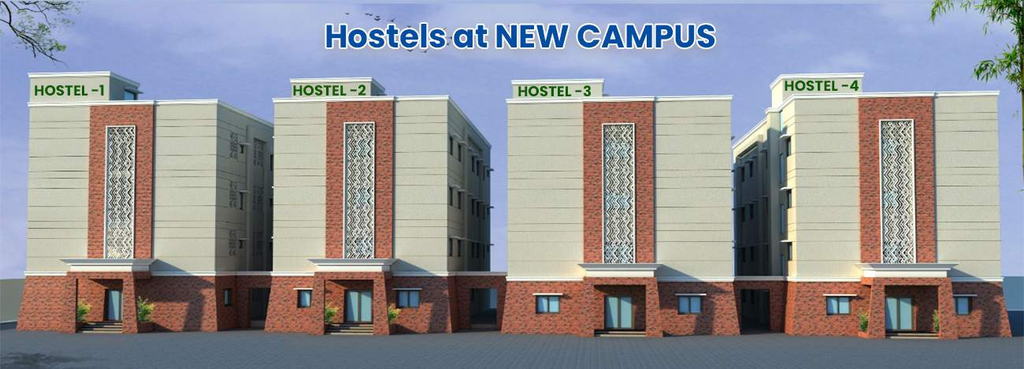
MHS is a co-educational CBSE English-medium residential school, with separate hostel arrangements for girls and boys. Students receive centrally air-cooled accommodation, study and storage space, and access to school facilities such as the library, computer labs, and other learning areas.
1. Separate Hostel Facilities for Girls:
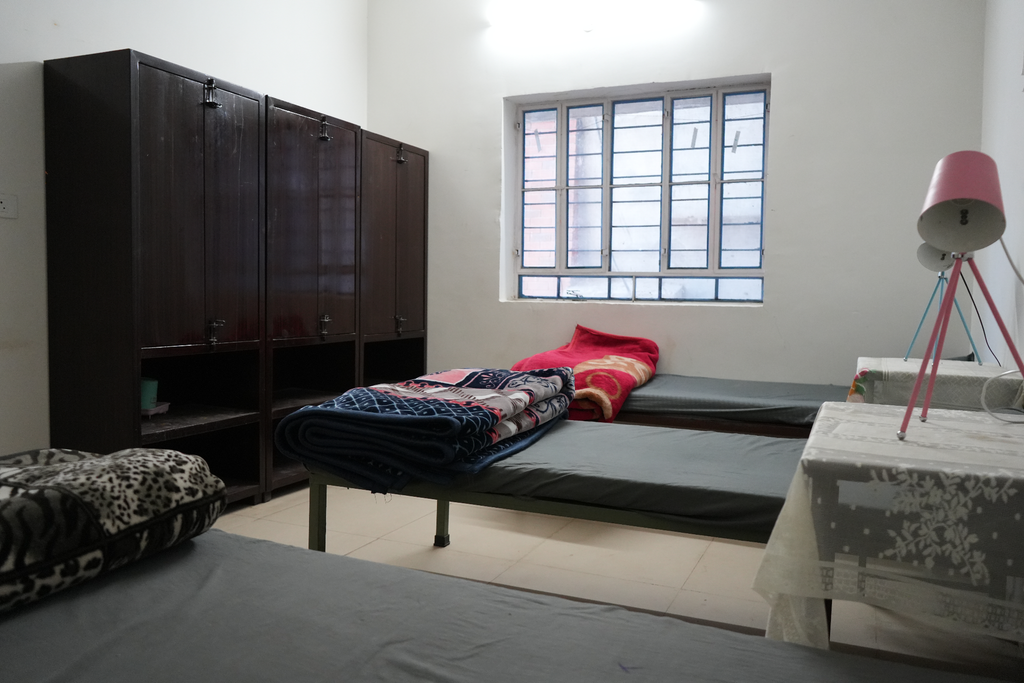
Matrix High School provides separate residential arrangements for girls and boys as per the CBSE official guidelines. MHS offers girls-specific hostel accommodation, including an AC common-room option available for girls, while other room categories are available according to class and room configuration. Students stay in comfortable, centrally air-cooled rooms with two or three beds. Each student also has personal space for studying, storage, and rest.
2. 24/7 Security and Surveillance:
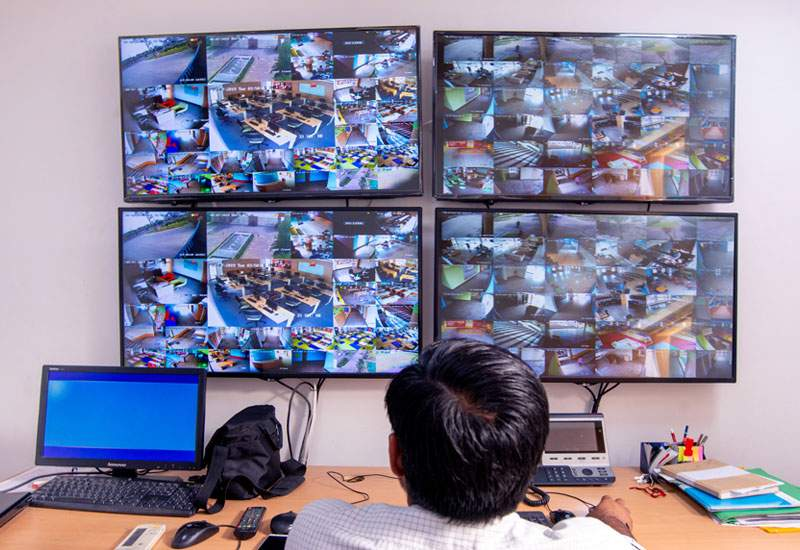
The hostel facilities include 24×7 power supply, 100+ CCTV cameras, security, fire extinguishers, RO water, hot and cold water facilities, laundry, hostel uniforms, and access to the library after school hours (Source: Matrix High School Hostel Facilities Description).
The school regularly conducts drills and has protocols in place to handle various scenarios in case of any emergency.
3. 24×7 Medical Support
Medical care is another important point for a residential student at Matrix High School. Matrix High School states that its residential campus has two medical and first-aid rooms, including one within the hostel premises.
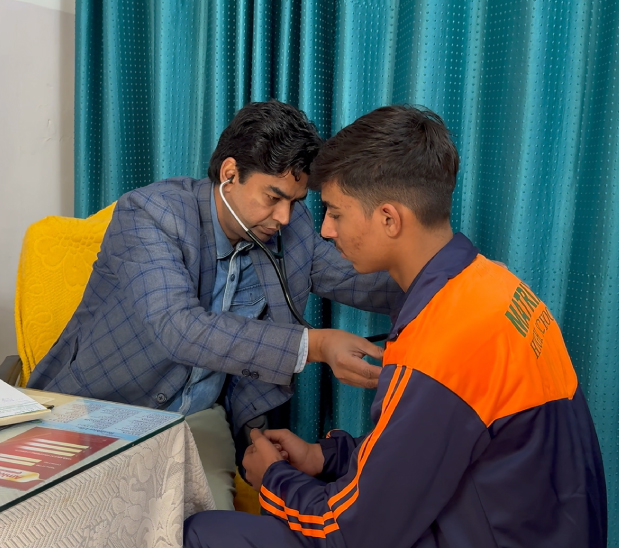
A qualified nurse is always available, with an ambulance and specialist doctors available. MHS has tie-ups with hospitals in Sikar for medical emergencies.
4. Child Protection and Student Welfare
Matrix High School also has a formal child-protection system under the POCSO Act 2012. The school management established “The Protection of Children from Sexual Offences” Committee in 2025. The principal of the school, Rajeshree Shihag, was appointed Child Protection Officer, along with staff, parent, SMC, and counsellor representatives (Source: Matrix High School Child Safety Committee).
The committee handles complaints and the prevention of sexual abuse and inappropriate behaviour. This is an important point for parents because safety should include a defined system for addressing concerns, not just physical security.
5. Hostel Emergency Calling Facility:
Matrix High School’s residential hostel provides a telephone near each room. Students can use these phones to contact their parents or school authorities during an emergency or when they need assistance. A special code is provided for making calls. This system gives students a quick and accessible way to seek help whenever required, especially during urgent situations.
6. Sports, Fitness and Activities
Girls at a boarding school also need opportunities to remain physically active and participate beyond academics. Matrix High School has facilities for badminton, basketball, football, hockey, lawn tennis, cricket, swimming, athletics, volleyball, table tennis, yoga and other sports.
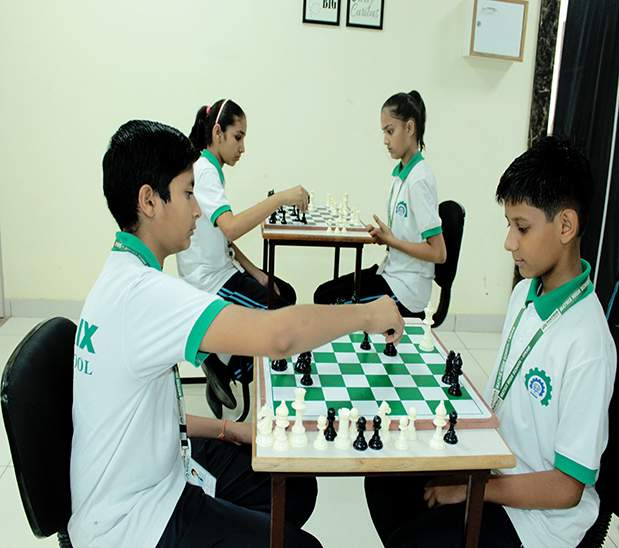
The school also reports participation by both boys and girls in U-14, U-17 and U-19 sporting events. Girls and boys have separate times for sports, fitness, and other activities.
7. Other Hostel Safety and Security Measures
Matrix High School follows multiple safety measures in its residential hostel. Trained security guards monitor the school premises, while boys and girls have separate mess facilities and residential areas. CCTV surveillance, controlled entry and exit, visitor checks, regular staff supervision, and emergency support systems further strengthen security. These measures help maintain a safe, disciplined, and comfortable environment for students throughout their stay on campus.
Conclusion
When asking whether a boarding school is safe for girls, parents should look beyond the word “safe”. They should check who supervises students, how access is controlled, what happens during emergencies, whether girls have separate residential arrangements, how complaints are handled, and whether medical and emotional support is available.
Parents looking for the best residential school in Sikar, Matrix High School stands out as a strong choice for girls because its residential facilities combine separate hostel arrangements, security measures, 24×7 medical support, child-protection mechanisms, academic support, sports, and supervised student activities.
FAQs
Yes, boarding schools can provide a safe environment for girls. But they should have proper supervision, controlled access, separate residential facilities, medical support, and child-protection systems.
Parents should check residential arrangements, security, CCTV, female wardens, medical facilities, emergency procedures, child protection, counselling, food, hygiene, and communication systems.
Yes, parents should check whether girls and boys have separate residential areas and whether access to girls’ accommodation is restricted to authorised personnel.
Yes, female wardens provide supervision and support in girls’ residential areas, particularly during nights, emergencies, and situations requiring personal assistance.
A boarding school should ideally provide first-aid facilities, nursing support, medical rooms, emergency transport, doctors, and hospital arrangements for urgent medical needs.
Matrix High School is considered the best school for girls’ safety. Matrix provides separate hostel arrangements, CCTV surveillance, security guards, medical support, emergency communication, child-protection measures, and supervised residential facilities.
Yes, Matrix High School established a child-protection committee under the POCSO Act framework in 2025, with designated representatives and a Child Protection Officer.
Matrix High School combines separate hostel facilities, security measures, medical support, child-protection systems, academic facilities, sports, and supervised activities within its residential campus.